Teaching

Teaching

For nearly two decades, Chuck Plaisance shaped the voices and careers of aspiring musicians at Musicians Institute (MI) in Hollywood, California -- one of the world's most prestigious contemporary music schools. His teaching journey is itself a remarkable story: he arrived as a student and was hired as an instructor within three months, launching a career that would influence generations of singers and performers.

From Student to Master: The Musicians Institute Years

In 1986, Chuck enrolled at Musicians Institute in Hollywood. The vocal program was only two years old at the time, and Chuck's raw talent and deep understanding of the voice were immediately apparent. Three months into his six-month course, the school hired him as a vocal instructor -- an extraordinary testament to his abilities. He would remain on the MI faculty for approximately 18 years, until around 2003.

At MI, Chuck studied under two mentors who profoundly shaped his approach: Jerome Stocco, whom Chuck describes as a Master Singer, and Claudia Neault. Their influence runs through everything Chuck teaches, from the technical foundations of breath and resonance to the emotional authenticity that separates good singers from great ones.

Chuck holds a California Teaching Certificate, formalizing the pedagogical expertise he developed over his years at MI.

Courses and Workshops

Chuck's teaching at Musicians Institute encompassed a wide range of formats:

The Pro Series Band

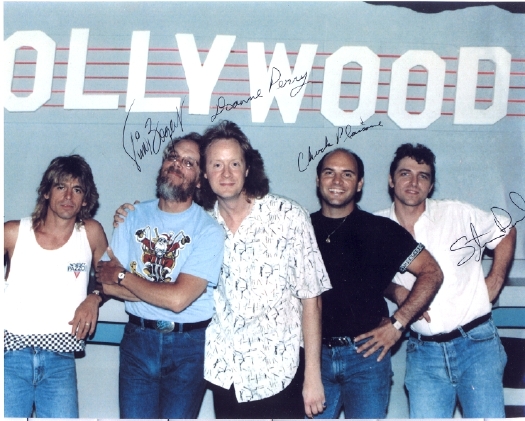
The "Hollywood Pro Series" Band

The crown jewel of Chuck's teaching career at MI was the "Hollywood Pro Series" -- a live performance workshop backed by an extraordinary band of seasoned professionals. Students didn't just learn in a classroom; they performed alongside musicians who had toured and recorded with some of the biggest names in rock history:

Additional MI collaborators who participated over the years included Steve Bailey (bass), Keith Wyatt (guitar), Casey Schurrell, Paul Hanson, Steve Travato, Mark Hart, Earl Slick, and Mark Farner. The workshop gave students the rare experience of performing with musicians who had graced the world's biggest stages -- an education that no textbook could replicate.

Notable Students and Associates

During Chuck's tenure at MI, the school was a magnet for extraordinary talent. Among the notable artists who passed through MI during this period were Billy Huffsey and Sheryl Crow, along with countless other singers who went on to professional careers shaped in part by Chuck's guidance.

The MI Japan Connection

Chuck's teaching influence extended across the Pacific. He performed and taught at the Tokyo Music School as part of MI's international outreach, bringing his vocal techniques and performance philosophy to Japanese students eager to learn from a Hollywood vocal master.

Teaching Philosophy: "Less Means More"

Chuck's teaching philosophy, refined over decades, stands in deliberate contrast to the "push harder" approach that dominates much vocal instruction. As he writes in The Vocal Instrument: "Anyone that can match pitch and has a sense of rhythm can sing but it doesn't mean they all sound good... This book is more about what 'not to do' to allow a full, powerful, rich and emotional sound to come out of your mouth, which means you will be doing less than you are doing now while producing a better sound."

The core principle is "emotional flexibility and intensity, not physical force." Chuck teaches singers to tune the voice rather than strain it, to minimize consonants and maximize vowels, to let emotional facial expressions drive vocal coloration naturally, and to maintain an open throat through relaxation rather than tension.

Chuck with guitar

Live Demonstrations and Clinics

Beyond the MI campus, Chuck has brought his teaching to broader audiences through live demonstrations and clinics:

A Legacy of Voices

From 1986 to the present, Chuck Plaisance has dedicated himself to passing on the knowledge he has gathered from stages, studios, and sacred spaces around the world. His students carry forward not just vocal techniques, but a philosophy of singing that honors the natural instrument, respects the emotional truth of music, and understands that the most powerful performances come not from force, but from freedom.